International Aid
Deployed Worldwide
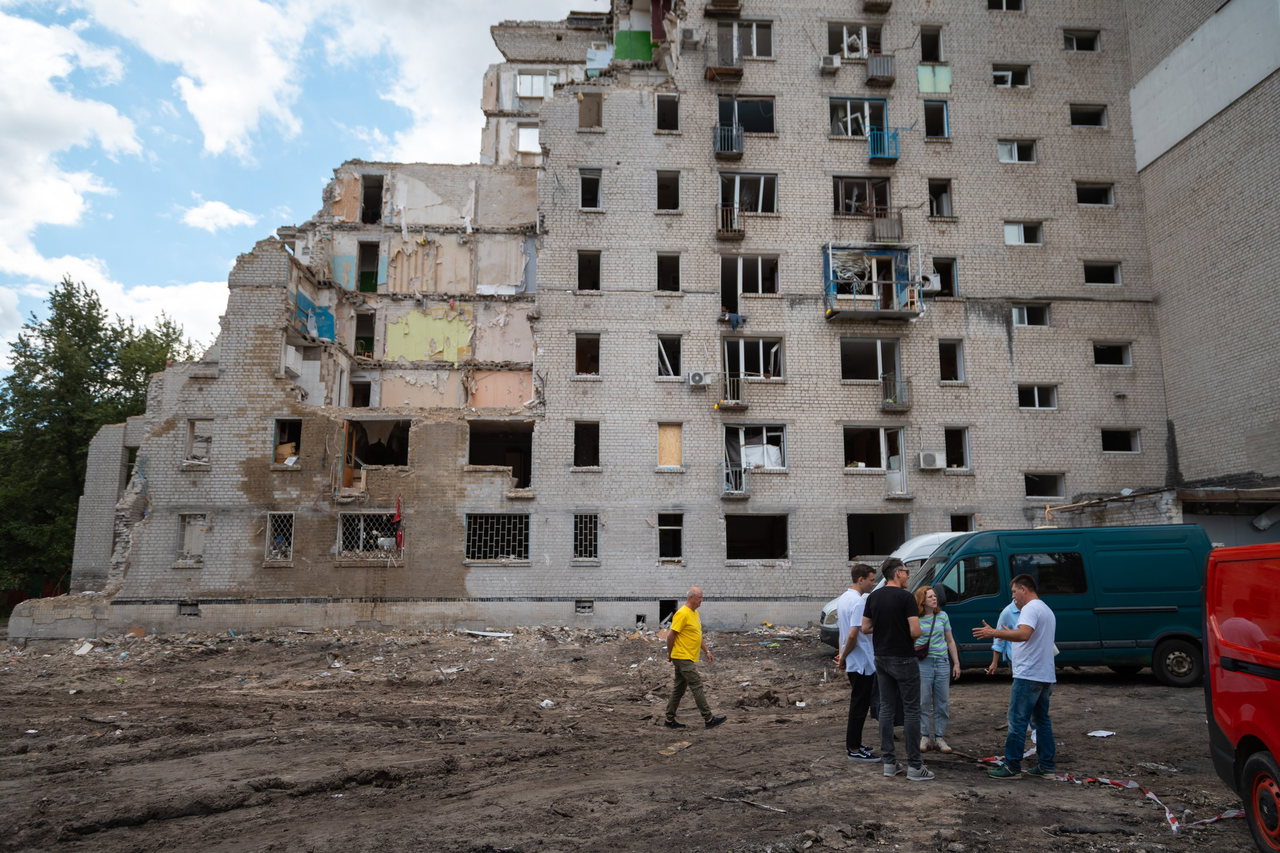
Reconstruction has now become a focus of ASB support in Ukraine.
Ukraine
Aid in the Fourth Year of the War
The ASB has provided humanitarian aid in Ukraine since the start of Russia’s war of aggression in 2022. Even in the fourth year of the war, millions of people depend on support. In 2025, our aid measures reached around 90,000 people.
Tens of thousands of people received food parcels, hygiene kits and other urgently needed relief supplies or – where possible – cash assistance so that they could buy essentials for themselves. More than 10,000 households received winter aid in the cold months. More than 6,000 people were given psychosocial support to help them cope with the continuing attacks, loss, displacement and uncertainty.
The focus of our aid has increasingly shifted to reconstruction as well. Schools, hospitals and social facilities in various regions of Ukraine are being renovated or rebuilt and equipped.
In this way, the ASB combines humanitarian aid with long-term reconstruction and strengthens prospects for people on the ground.
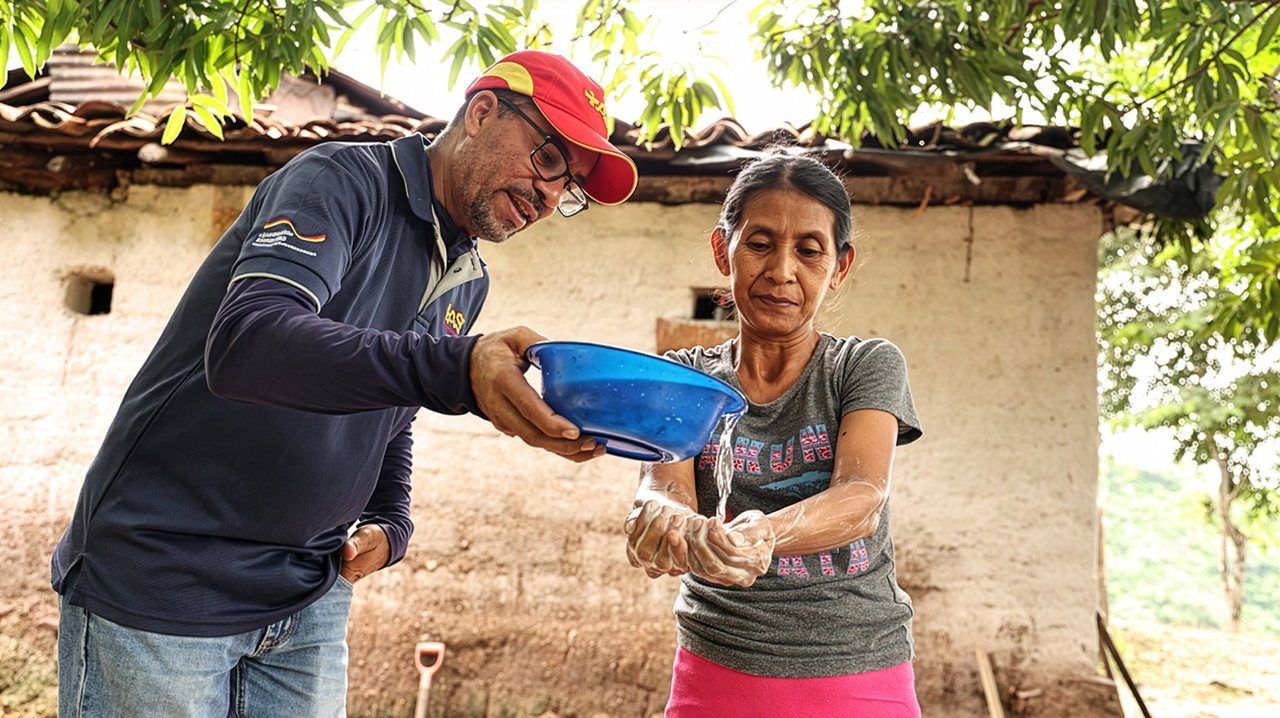
In communities in Honduras and Nicaragua, the ASB promotes safe water supplies and good hygiene practices.
Latin America and the Caribbean
Access to Water Resources
In Latin America, the ASB is strengthening inclusive disaster risk management and developed a guide that sets a global standard. It helps to include people with disabilities in emergency drills and simulations in a dignified and safe way. At the same time, the ASB improved water, sanitation and hygiene provision in communities in Honduras and Nicaragua affected by climate change. The focus was on measures that make access to water easier, strengthen the community management of water resources and promote health and hygiene practices.
In addition, the ASB developed drought early warning systems linked to national structures. They enable improved climate monitoring in rural communities in Honduras, El Salvador and Guatemala and give smallholder families as well as local and national authorities up-to-date information for informed decisions.
South and Southeast Asia
Climate and Disaster Preparedness
In 2025, the ASB was active in Indonesia, Myanmar, Bangladesh, Nepal, Bhutan and the Philippines – countries that are particularly badly affected by disasters and the consequences of climate change. Together with 12 local partner organisations, the ASB strengthened people’s resilience through disaster risk reduction, climate adaptation, poverty reduction and social inclusion. Particular attention was paid to women and people with disabilities, so that they can represent their interests with confidence and help shape social change.
By training local first responders and strengthening disaster control structures, communities were able to respond more quickly in an emergency. Measures to protect and restore natural ecosystems helped to reduce climate-related risks and secure livelihoods in the long term. After earthquakes, landslides, floods and volcanic eruptions, the ASB also provided rapid and inclusive humanitarian aid.
Southeast Europe
Inclusion at Municipal Level
In 2025, the ASB in the Western Balkans concentrated on the inclusion of people with disabilities, the empowerment of women, disaster risk reduction and support for local social service providers. In the “Empowered” project, 15 inclusion teams were set up in six Balkan countries to plan inclusion strategies and initiatives at municipal level. Women were empowered through training, equipment and workshops. In Bosnia, Kosovo and Serbia, the ASB provided drones and training for eleven civil protection teams. In addition, the ASB supported local civil society social service providers through the regional IRIS network.
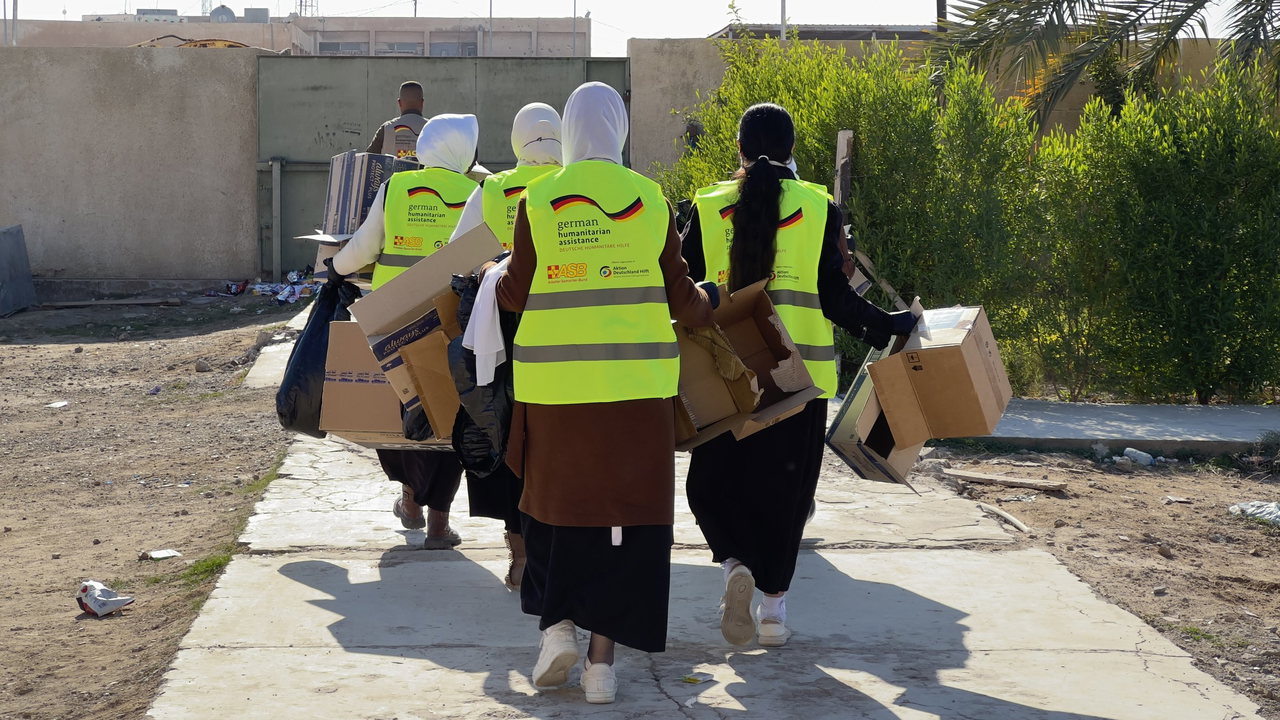
In Iraq, one focus of the ASB is on promoting the health and future prospects of women.
Iraq
Better Conditions for Women
In 2025, ASB Iraq strengthened the resilience, participation and future prospects of women, people with disabilities, displaced people and returnees. Measures in the areas of livelihoods, education, health, WASH and climate strengthened knowledge and the ability to act on health, hygiene, climate risks and disaster risk reduction. Health campaigns promoted breast cancer screening and mental health. Improved WASH facilities created safe learning environments for schoolgirls. Local actors were strengthened in responding better to climate risks and disasters, while young people and small businesses were able to build new skills and prospects.
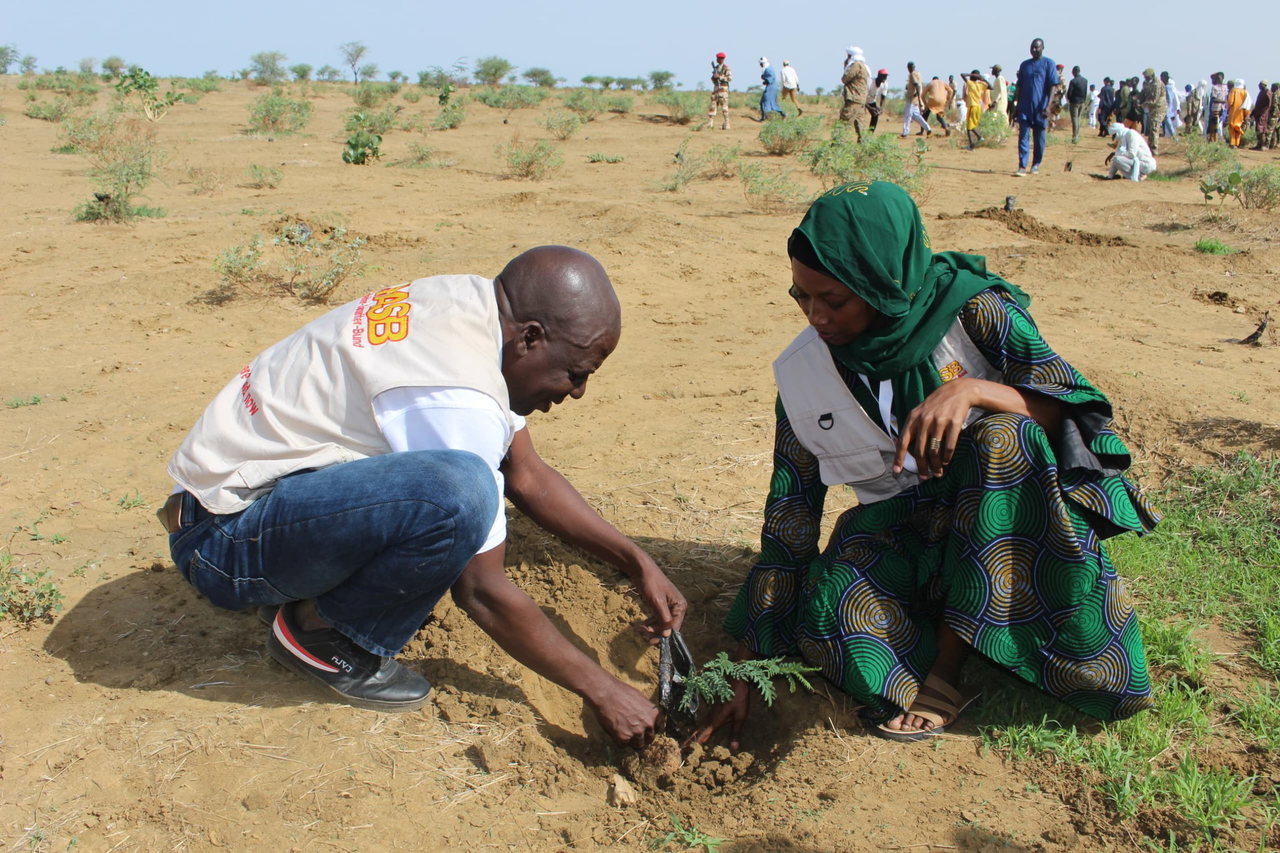
Alongside the distribution of seeds, refugees also receive agricultural training.
Niger and Sudan
Support and Provision for Refugees
The ASB works in Niger with more than 40 employees at three locations – since 2025 in Maradi as well as Niamey and Tahoua. A total of seven projects concentrated on providing people affected by flight and displacement, and host communities, with water, food, seeds, animal feed, emergency shelter kits and cash, as well as on rehabilitating water points and grazing land and supporting water and peace committees. In Sudan, the ASB worked with a partner to combat the spread of cholera through clean drinking water and hygiene measures.
Georgia and Armenia
Integration of Refugees
In 2025, the ASB reached more than 5,133 people in Georgia and Armenia with measures for socio-economic development, resilience building and humanitarian aid. One focus was the integration of refugees into host communities, in particular Ukrainian refugees in Georgia and refugee women from Nagorno-Karabakh in Armenia. Through community-based programmes, the ASB strengthened resilience and access to socio-economic opportunities. In this way we opened up new prospects for a sustainable future for disadvantaged groups.
Syria
Building Health Stations
After the devastating earthquake in 2023, the ASB expanded its aid in Syria in 2025 into a long-term commitment. Together with local partner organisations, the ASB supports around 65,000 people in north-west Syria in the areas of water, health, food security and reconstruction. This includes restoring the water supply in Idlib Governorate, supporting the children’s ward at the hospital in Maaret Tamsrin, and measures to strengthen livelihoods and local infrastructure. The focus is on sustainable solutions and the active participation of communities.
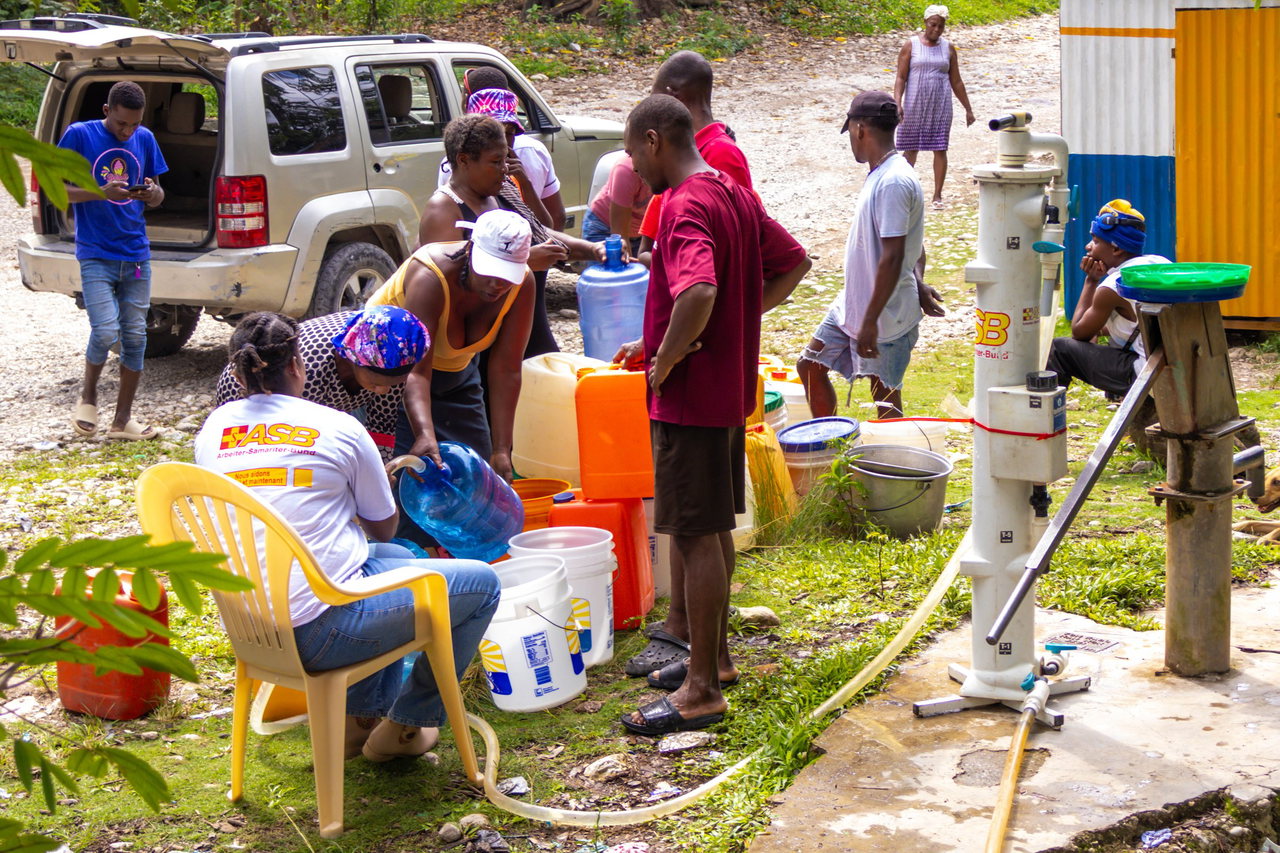
Rapid drinking water treatment after Hurricane Melissa.
Haiti
Severe Political and Humanitarian Crisis
Haiti has been in a severe political and humanitarian crisis since the assassination of President Jovenel Moïse in 2021. In addition to the aid measures under the WDR Christmas campaign, the ASB provided emergency relief after Hurricane Melissa in October 2025 and supplied more than 1,000 people affected with drinking water, food and hygiene kits. At the same time, through long-term projects, the ASB strengthened access to water, food security and sustainable income opportunities, thereby improving people’s livelihoods.
Aktion Deutschland Hilft and the WDR Weihnachtswunder
The ASB has been part of the Aktion Deutschland Hilft (ADH) alliance since 2001, which in 2025 was again a partner of the “WDR 2 Weihnachtswunder”. During the campaign, WDR collected donations under the motto “Together against hunger in the world”. The ASB received funding for northern Iraq, where it supported women with training and with setting up micro-enterprises. The ASB also received funds for Niger to help internally displaced people and host communities secure their livelihoods.
Cross-Cutting Themes in International Aid
Climate-Sensitive Water and Sanitation Systems
Important foundations for the ECT-WASH project were laid in 2024. In 2025, the focus was on locally adapted, environmentally sound and climate-resilient measures in water, sanitation and hygiene (WASH). The starting point is the realisation that WASH structures must evolve to withstand the consequences of climate change, protracted crises and environmental degradation.
Under the ECT approach (Environment and Climate Transformation), partner organisations and communities actively help to shape new approaches, take on responsibility and develop them further. Climate and environmental aspects are included in decision-making from the outset. With tools such as NEAT+, an instrument for measuring environmental risks, they are systematically integrated into planning, implementation and accountability. At the same time, inclusive, community-based management structures strengthen immediate humanitarian aid and long-term resilience. The result is more climate-resilient WASH services, stronger local capacities, better preparedness and smaller ecological footprints. Resilience is built on participation, trust and sustainable partnerships.
Quality Assurance and Training
In 2025, too, the ASB saw itself as a learning organisation in which knowledge arises from continuous exchange between partner organisations, country offices and the Federal Association (“Two-Way Learning”). Mutual trust, networking and shared learning form the basis of this cooperation. International expert networks on nature-based solutions, inclusive measures in water, sanitation and hygiene (WASH), and inclusion were continued.
In addition, training courses on protection from sexual exploitation, abuse and harassment (PSEAH) and on corruption prevention were again held at local level. In Ukraine and other country offices, training was delivered on the Sphere Standards for quality and accountability in humanitarian aid. In Sudan and Syria, the People First Impact Method (P-FIM) helped to build trust, listen to people and develop projects further together with communities. Over the course of the year, skilled professionals from 14 countries took part in the various learning formats.
ASB Yearbook 2025 · A Year of Impact
Annual report of the Arbeiter-Samariter-Bund Deutschland e. V.
Sülzburgstraße 140 · 50937 Köln · Telephone (0221) 4 76 05-0 · info@asb.de
© 2026 Arbeiter-Samariter-Bund Deutschland e. V. · Editorial team: Communications and Public Affairs department · Cover image: Florian Büttner