Civil Protection
First aid as a core task of the ASB
First aid training has always been one of the ASB’s core tasks and makes an important contribution to building confidence in how to act in emergencies. In 2025, courses were offered at 115 authorised centres nationwide. The range extends from first aid courses for learner drivers and the initial and further training of workplace first aiders to offerings for staff in education and childcare facilities. Courses on first aid for infants and small children in emergencies are also a fixed part of the training programme. At many locations, first aid for dogs is also offered in addition.
The further development of first aid training was completed in 2025 with the provision of method boxes for the courses “First Aid Refresher Training” and “First Aid in Educational and Childcare Facilities”. As a result, uniform teaching and method materials were available nationwide to ASB branches and authorised centres.
Reform of emergency care: light and shadow
In its statement on the reform of emergency care at the end of 2025, the ASB welcomed the planned recognition of emergency medical services as medical care under Book V of the Social Code (SGB V) as well as the intended harmonisation, digitalisation and introduction of uniform quality standards. It sees a need for improvement above all in how these are put into effect: the aid organisations, which provide 80 per cent of emergency medical services, must be given voting rights. In addition, the ASB calls for clear and cost-covering funding arrangements that increase neither the administrative burden nor the financial risk for service providers, as well as genuine participation with a seat on the expert body planned for the future at federal level.
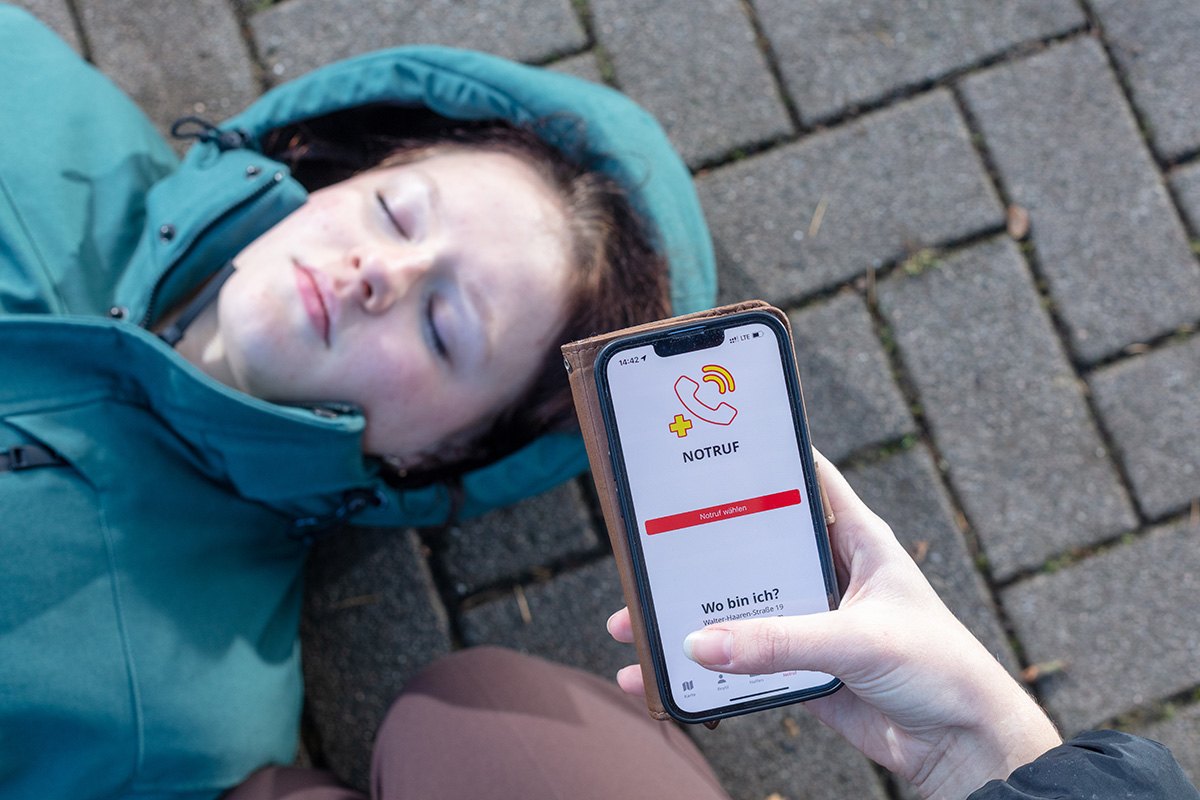
ASB SCHOCKT:
First control centres connected to emergency app
Part of the present is a reality that the ASB’s founders already knew: in an emergency, help is rarely exactly where it is needed immediately. Helpers must be found quickly, reached and guided in a targeted way. This is precisely where ASB SCHOCKT comes in – a growing nationwide project that takes digital first responder alerting to a new level.
The idea behind it: alert first responders nearby via smartphone and show the nearest automated external defibrillator (AED) – across all apps.
Thanks to the cooperation with KatRetter and the Fraunhofer Institute for Open Communication Systems (FOKUS), control centres can reach helpers regardless of the app they use. This creates a single alerting channel across previous system boundaries and throughout Germany – a genuine unique selling point of ASB SCHOCKT.
After the integrated regional control centre Schaumburg and Nienburg was connected in March 2025, the central control centres Bergstraße and Dietzenbach (Offenbach district) in Hesse followed, and in December the integrated control centre Landau in der Pfalz was connected. By the end of the year, more than 3,600 registered first responders and almost 6,000 AEDs were ready for use – and the trend is sharply upward.
At the end of 2013, the ASB regional association Hamburg launched the HAMBURG SCHOCKT initiative against sudden cardiac arrest. In 2021, the ASB Federal Association took over the project.
First aid with self-protection content
With the start of the new funding period from 2025 to 2029, the programme “EHSH – First Aid with Self-Protection Content” continues its success story. The sustained strong interest among the public underlines the great importance of self-protection and crisis preparedness.
Since the programme began in 2020, around 155,000 people have been trained nationwide in about 9,100 EHSH courses up to 2025. Around 82 ASB branches deliver the programme locally and thereby make an important contribution to strengthening resilience and civil protection in Germany.
With the start of the new funding period, the proven modules were developed further and in some cases opened up to additional target groups. In this way, even more people can acquire practical knowledge of self-protection, neighbourly help and first aid and prepare for crisis and disaster situations.
EHSH thus remains an indispensable offering that empowers people to act quickly, safely and competently in emergencies. We look forward to continuing this successful path together in the coming years and to reaching many more people.
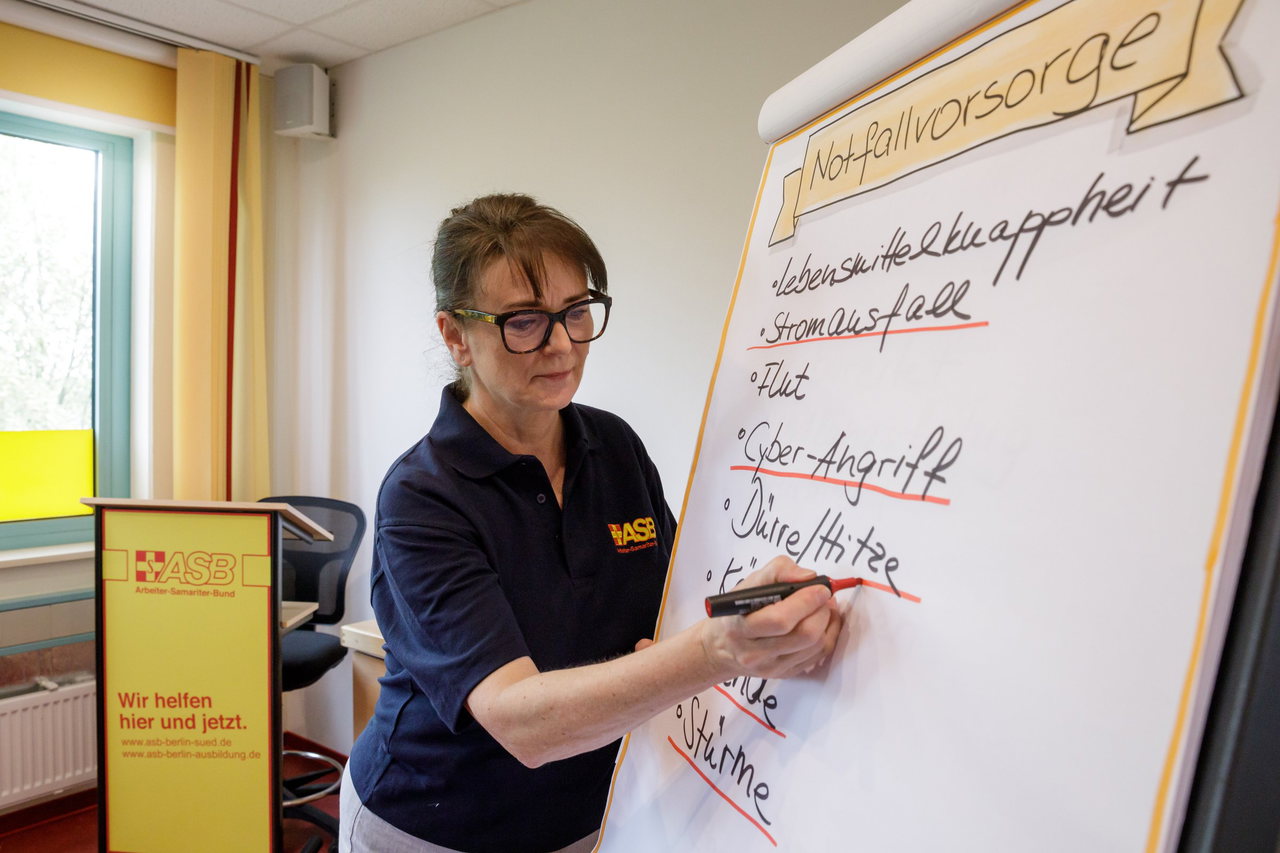
“The population must become more resilient”
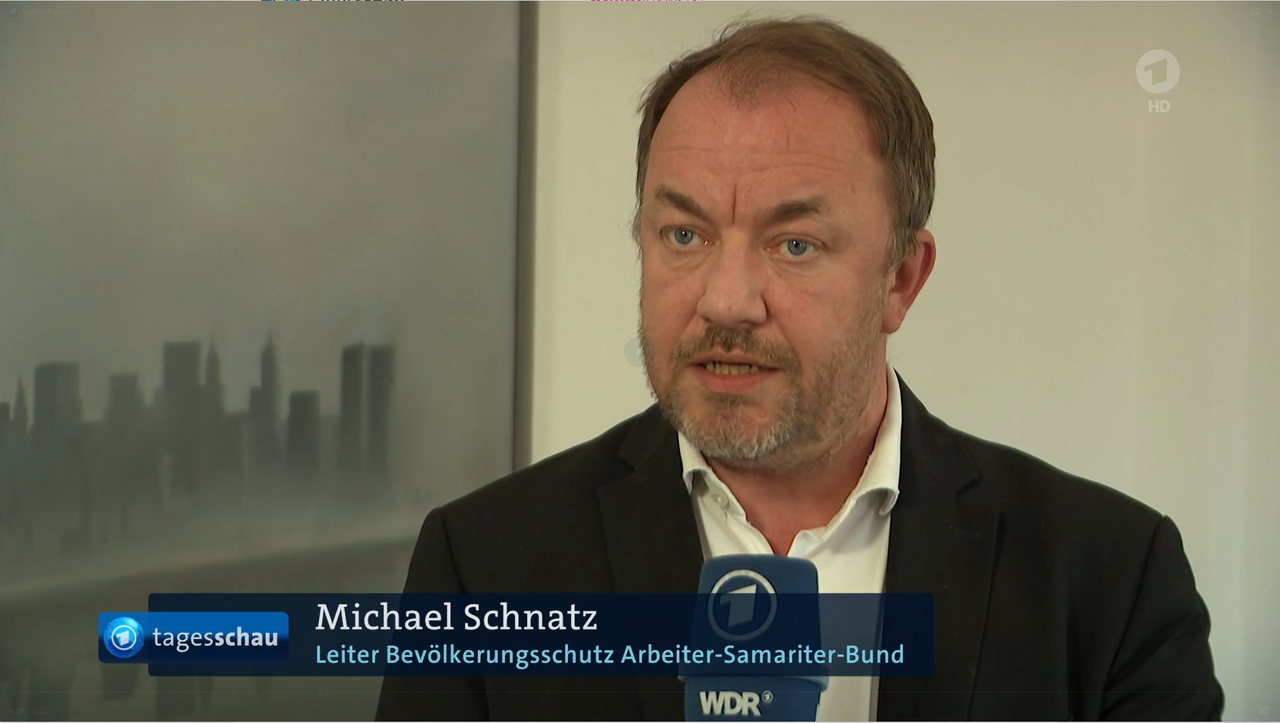
On 29 April 2025
Head of Department Michael Schnatz explained on the Tagesschau, following the power outage in Spain, how to prepare for such situations: it is important to get ready for emergency situations.
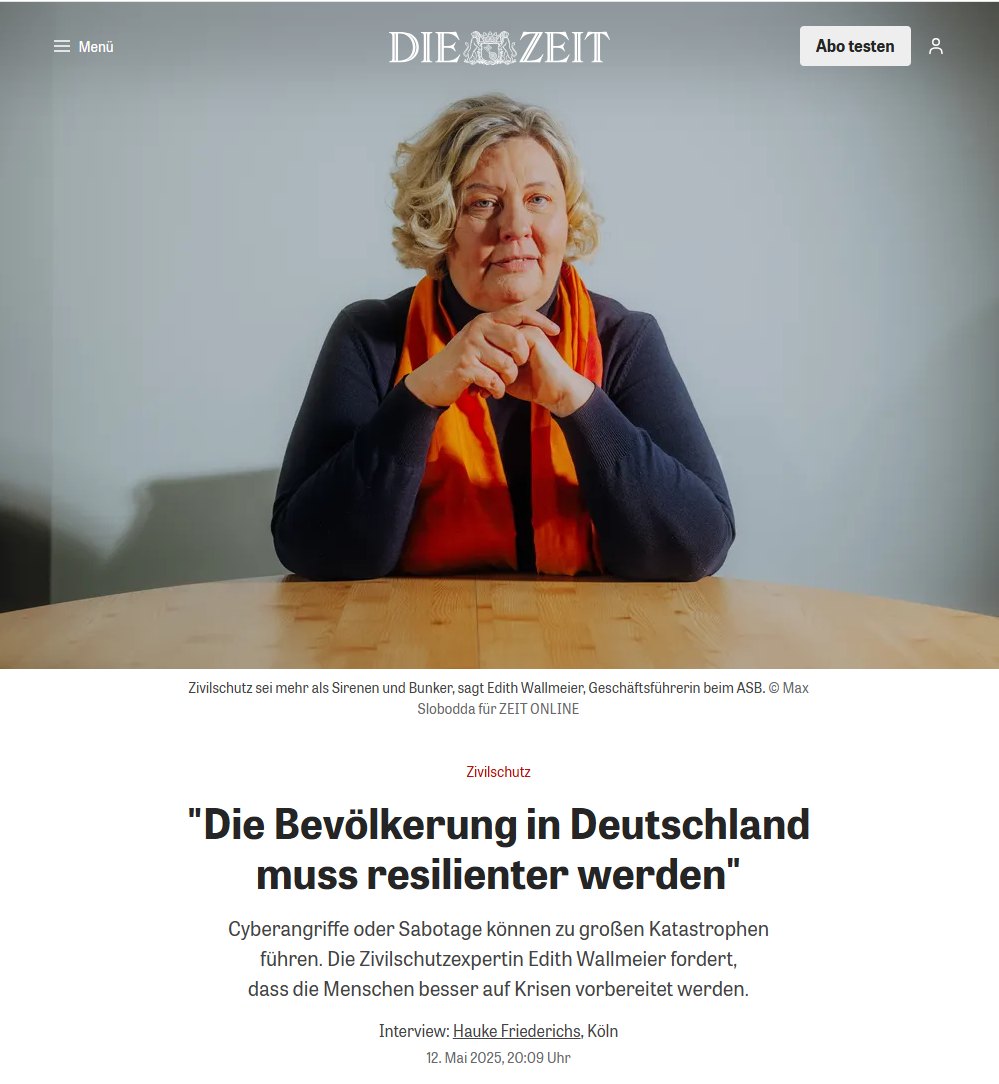
On 12 May 2025
an interview with Edith Wallmeier, ASB Managing Director for Emergency Services and Education, appeared on zeit.de: “The population in Germany must become more resilient”.

ASB Yearbook 2025 · A Year of Impact
Annual report of the Arbeiter-Samariter-Bund Deutschland e. V.
Sülzburgstraße 140 · 50937 Köln · Telephone (0221) 4 76 05-0 · info@asb.de
© 2026 Arbeiter-Samariter-Bund Deutschland e. V. · Editorial team: Communications and Public Affairs department · Cover image: Florian Büttner